
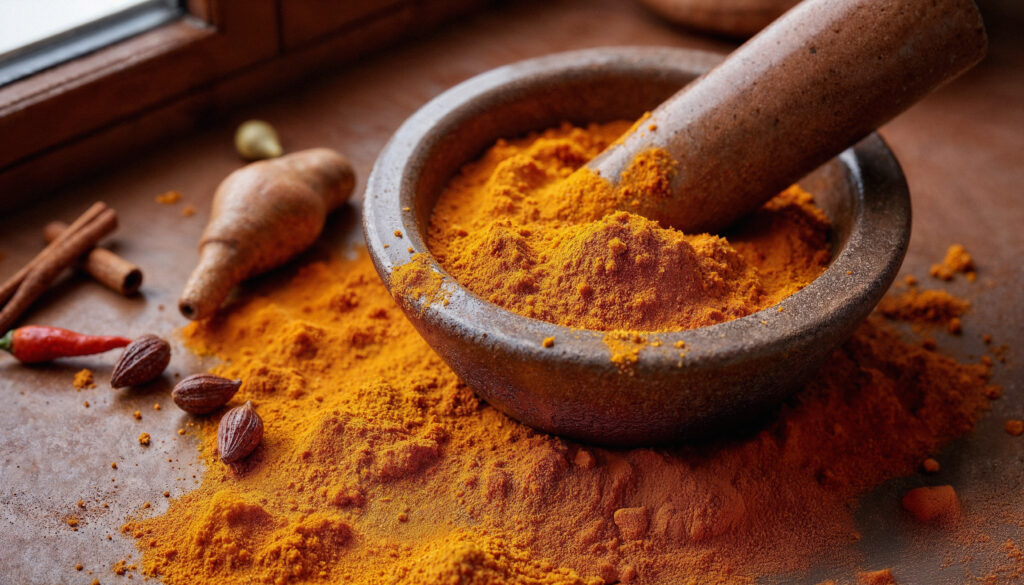
Curcumin is the natural compound found in turmeric that gives it its bright yellow color and most of its health benefits. For international buyers, curcumin content is one of the most important quality parameters when sourcing turmeric.
Why Curcumin Content Matters
Buyers prefer turmeric with higher curcumin levels because it means:
- Stronger color
- Better aroma and taste
- Higher medicinal and nutritional value
- Better performance in food, supplements, and pharmaceuticals
This is why curcumin percentage directly impacts price and demand in export markets like the UK, Germany, USA, and UAE.
Typical Curcumin Levels
- Standard Turmeric: 2% – 3%
- Premium Export Quality: 3% – 4%
- High Curcumin (Sangli / Maharashtra Turmeric): 4% – 5%+
Turmeric grown in regions like Sangli, Maharashtra is globally known for its naturally high curcumin content, making it highly preferred by importers.
How Curcumin Content Is Tested
Curcumin is measured through laboratory testing, usually by:
- HPLC (High-Performance Liquid Chromatography)
- UV Spectrophotometer methods
Export buyers often ask for:
- Lab test report
- Batch-wise curcumin percentage
- Certificate of Analysis (COA)
Providing lab reports builds trust and credibility.
Curcumin Content vs Color (Important Clarification)
Bright yellow color does not always mean high curcumin.
Some low-quality turmeric powders look bright because of:
- Artificial polishing
- Color enhancement (which is not allowed in exports)
Serious buyers rely on lab-tested curcumin, not just appearance.
Organic Turmeric & Curcumin
Organic turmeric can also have high curcumin, but the key difference is:
- No chemical pesticides
- Certified organic farming practices
- Slightly higher cost, higher acceptance in EU & UK markets
Buyers often ask for both curcumin % and organic certification.
What International Buyers Usually Ask
Before finalizing a deal, buyers typically ask:
- What is the curcumin percentage?
- Is it lab-tested?
- Is it suitable for food or medicinal use?
- Is it organic or conventional?
- Can you provide consistent quality?
Being ready with these answers makes negotiations smoother.
Final Tip for Exporters
If you are sourcing turmeric for export:
- Always ask suppliers for curcumin test reports
- Source from high-curcumin regions like Sangli
- Avoid mixed or unknown-origin turmeric
- Match curcumin levels with buyer requirements
High curcumin content is not just a number; it’s a quality promise that international buyers value.